
How Organizations in GCC are Responding to Rising Security Threats with Leadership and Risk Management
22nd April, 2026
Since the formation of the UAE on 2nd December 1971 and the creation of the Gulf Cooperation Council (GCC) on 25th May 1981 up to the present day, the security threat landscape has evolved rapidly into one of the most significant concerns for all those involved with, and responsible for, the prosperity, safety, and security of the Gulf countries within the Middle East.

The original strategy of GCC leaders (Saudi Arabia, Oman, Kuwait, Bahrain, Qatar, and the UAE) was centred on ensuring the stability of the Gulf region, while driving:
- Economic diversification and growth
- Strong, positive relationships with global trade and business
- The creation of a strong professional reputation and global influence
- Modernisation in line with evolving technology, delivered in a time-efficient manner to position the region as a future global market leader
Historically, ten main factors have influenced the development of the GCC and shaped what is now often considered a complex and, at times, unstable security threat environment. Despite this, the GCC has contributed significantly to regional stability while navigating ongoing uncertainty across the Middle East. These influencing factors include:
- Religion
- Territory
- Resources
- Economic considerations
- Domestic and global politics
- Power and influence
- The security threat environment (including regional tensions in Iraq, Yemen, Iran, and Israel)
- Leadership and governance
- Demographics and societal dynamics
- Technology, innovation, and modernisation
These ten factors operate independently while frequently overlapping, creating a complex web of domestic and international influences. Together, they shape how GCC countries maintain stability and respond to evolving risks and challenges.
At its core, the GCC’s early success was driven by a collective vision to harness natural resources, particularly oil and gas, and leverage the resulting wealth. This enabled member states to position themselves as leading global energy exporters while simultaneously building strong economic and business relationships with major international partners, including the USA, Japan, China, Russia, and the European Union.
It was recognised early on that GCC member states possessed varying levels of natural resources. This reality necessitated a collaborative and multi-faceted approach to sustained investment and long-term success. Through coordinated efforts, GCC countries capitalised on their collective strengths, investing heavily in modern infrastructure. This not only strengthened their global financial standing but also transformed the region through the development of iconic projects such as airports, ports, road networks, tourist destinations, and religious landmarks.
However, this rapid development and growing prosperity also brought unintended consequences. The region increasingly became a focal point for external actors, some of whom sought to influence, exploit, or replicate this success. These actors often pursued their objectives by leveraging the same ten influencing factors, combined with their own strategic ambitions.
Today, the global environment is widely regarded as volatile, uncertain, and complex, particularly within the Middle East. Security threats in the region have increased significantly since 1971, compounding existing tensions and creating a more demanding operating environment for governments, organisations, and individuals alike.

As a result, there is an increasing need for robust security measures to protect people, property, information, processes, and policies. Modern security threats, including cybercrime, terrorism, insider risks, and crowd safety challenges, require a more sophisticated approach to security resilience and risk management. The objective is not only to reduce the likelihood of incidents but also to minimise vulnerability and exposure.
Drawing on years of operational security experience and academic study, it is evident that three primary approaches to security exist:
- Waiting for incidents to occur before responding (reactive measures)
- Allowing incidents to occur and then attempting to respond (reckless or negligent practices)
- Anticipating risks and acting in advance (proactive measures)
A clear example of the importance of proactive security can be seen in the cyberattack on Saudi Aramco on 17th September 2012. The malware attack, known as ‘Shamoon’ (also referred to as ‘Distrack’), impacted over 30,000 workstations, destroying hard drives, erasing data, and rendering systems unusable. The attack caused significant disruption to corporate operations and resulted in substantial financial and reputational impact.
However, due to pre-existing isolated systems, Aramco’s core oil production, drilling, and exploration activities remained operational. This enabled a relatively effective recovery and provided valuable lessons that informed future security enhancements.
In the aftermath of the attack, several key measures were implemented, including:
- Critical infrastructure assessments
- Enhanced insider security threat analysis
- Improved incident response capabilities
- Strengthened physical security and access control systems
- Targeted security training for key personnel and leadership
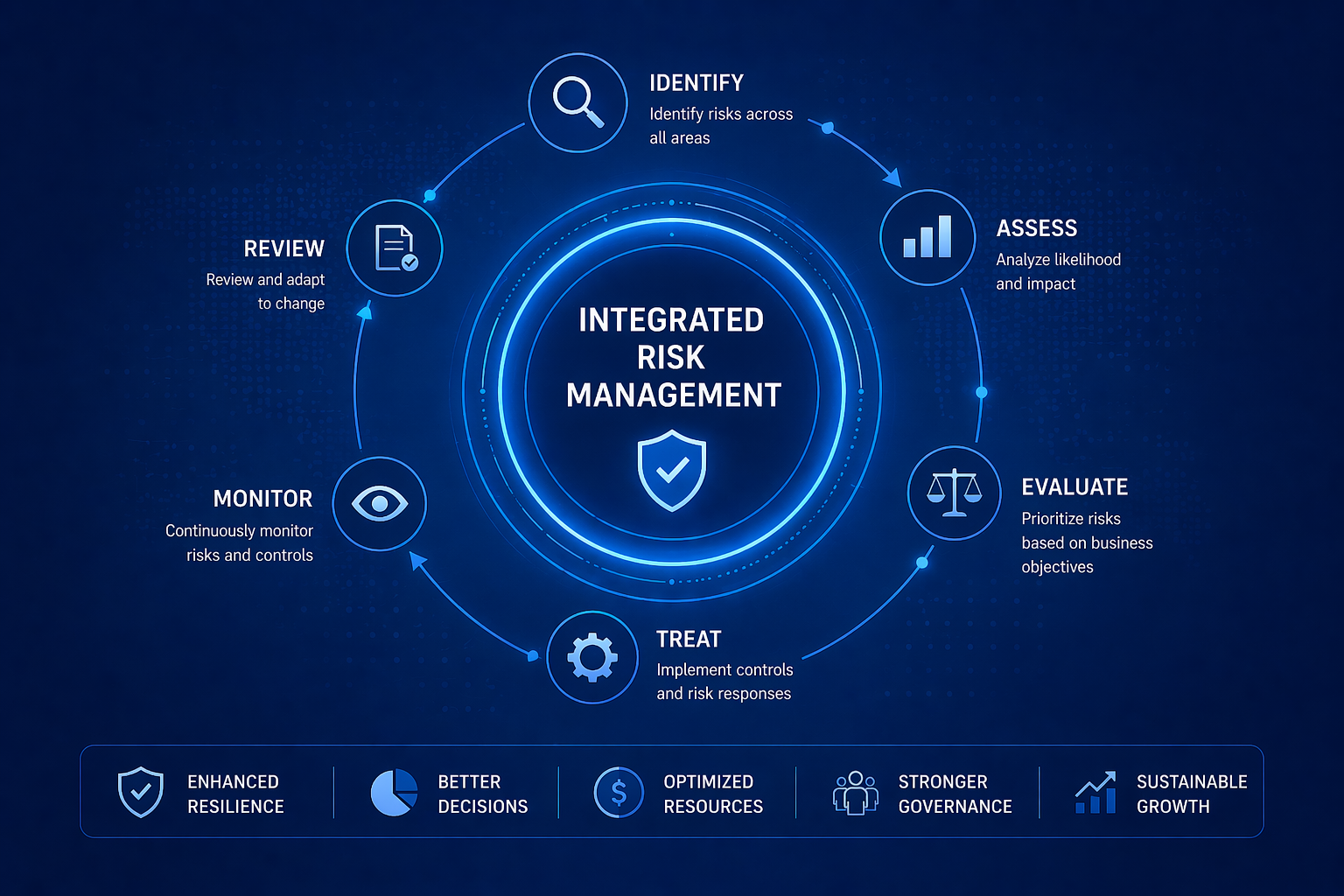
To effectively address modern security threat challenges, organisations across the GCC must adopt a structured and comprehensive approach. This includes identifying threat typologies, applying robust frameworks, and classifying assets based on risk and criticality. Such measures enable organisations to highlight vulnerabilities, reduce exposure, and implement effective protective strategies.
An integrated, multi-layered approach to security is essential. This requires continuous performance monitoring, strong strategic decision-making frameworks, and regular review processes to ensure accountability and effectiveness. Equally important is ensuring that all personnel responsible for security and safety are equipped with the appropriate tools, knowledge, and skills.
Historically, risk management, safety, and security functions were often managed separately within organisations, leading to gaps in coordination and response. Over time, this fragmentation has proven to be a weakness, particularly during major incidents where alignment and clarity are critical.
In today’s environment, there is a clear need for greater integration. Organisations must ensure that these functions operate cohesively, sharing best practices and aligning strategic objectives to strengthen overall resilience.
It is widely acknowledged within the security and intelligence community that it is not possible to prevent every attack. Therefore, the responsibility lies in implementing effective measures, applying structured methodologies, and leveraging intelligence to reduce risk. Through continuous monitoring, education, and awareness, organisations can significantly improve their ability to manage threats and respond effectively.
Ultimately, the goal of security planning and risk management is to transition from reactive approaches to proactive, forward-looking strategies. This shift aligns closely with the broader national visions of GCC countries, including UAE Vision 2030 and Saudi Vision 2030.
Modern security strategies must combine systems, processes, and human expertise with advanced technology to identify, mitigate, and reduce threats. Flexibility, continuous evaluation, and accurate risk management are essential to ensuring effectiveness.
Leadership also plays a critical role. Strong leadership, combined with operational expertise and sound decision-making, is vital in responding to incidents and managing uncertainty. Security is no longer confined to dedicated departments; it is a shared responsibility across organisations and communities.
Maintaining vigilance, encouraging awareness, and fostering a culture of accountability are essential in ensuring long-term security and stability across the region.
About the Author:
George Jaffray is a PLUS facilitator delivering Security Management and Risk Management courses. He has over 35 years of experience in the security industry, specializing in security operations and risk management. He has supported security training for major events including the FIFA World Cup in Qatar, London 2012 Olympics and Paralympics, and the 2014 Commonwealth Games. He has been delivering training and consulting services for nearly 20 years across the GCC and the UK, working with clients such as the Saudi Ministry of Interior, Dubai Police, Abu Dhabi Police, and Aramco. He is also recognized for contributing to the design of security qualifications and supporting military training programs and is well regarded by participants for his practical expertise and engaging delivery style.
To learn more about our facilitators and courses, explore our Security Management courses or get in touch to find out how we can help your organization strengthen its security management practices.
Related Blogs

Implementing AI into your organization. Where do you begin?
Starting with AI in Your Organization: Building the First Capabilities Artificial Intelligence (AI) is transforming the business landscape, offering unprecedented opportunities for innovation, efficiency,...
Facilitator/ Blogger
11th August, 2024
Read More

Turning the Credit and Collections Department into a Profit Earning Function
Below is a real-life case study by Jon Ray MICM. A few years ago, I was doing some consultancy work for one of the big European banks. This institution had some i...
Facilitator/ Blogger
22nd October, 2017
Read More
The Audit Report Writing Mindset
Perhaps the most challenging part of an auditor’s role is the communicating of results in order to achieve effective remediation of any control deficiencies. Audit reports are, perhaps, the ...
Facilitator/ Blogger
16th March, 2016
Read More