Overview
Course Methodology
This course follows an interactive, hands‑on methodology that blends instructor-led discussions with practical exercises, real-life business examples, and short video demonstrations. Participants work on case scenarios to apply key Six Sigma tools, ensuring that concepts are reinforced through practice rather than theory. Visual explanations, guided group activities, and data-based exercises strengthen participants’ understanding and promote long-term retention.
Course Objectives
By the end of the course, participants will be able to:
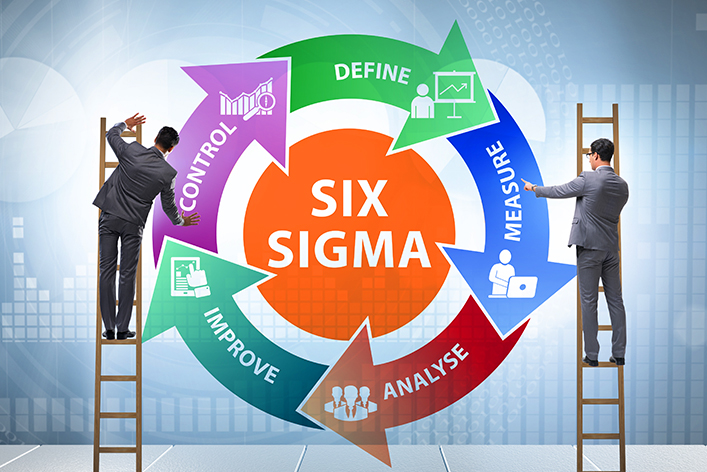
- Apply the DMAIC methodology to diagnose and improve business processes using structured problem‑solving
- Identify inefficiencies, variation, and root causes through practical analytical tools such as SIPOC, Pareto charts, and fishbone diagrams
- Develop and implement practical improvement and control solutions that enhance quality, reduce variation, and sustain performance gains
Target Audience
This course is designed for supervisors, team leaders, engineers, process owners, middle managers, and operational staff involved in process improvement and quality enhancement. It also serves professionals in business excellence, project management, and continuous improvement roles, along with early‑career professionals seeking a strong foundation in Six Sigma and data-driven decision-making.
Target Competencies
- DMAIC problem‑solving
- Process mapping and SIPOC analysis
- Root cause identification
- Basic data analysis
- Solution design and evaluation
- Control planning and sustainability
Course Outline
- The Six Sigma Framework
- Introduction to Six Sigma and the philosophy of quality
- The Six Sigma Methodology (DMAIC)
- Project selection and business alignment
- Voice of the Customer (VOC)
- Roles, belts, and governance structures
- Measuring Performance and Analyzing Root Causes
- Types of data and basic statistics
- Variation, mean, and standard deviation
- Pareto charts and prioritization
- Fishbone diagrams and the 5 Whys
- Process mapping
- Understanding the analysis stage
- Implementing Solutions and Sustaining Performance
- Brainstorming and solution selection
- Preventing errors using Poka-Yoke
- Identifying and preventing problem areas
- Control planning and documentation
- Sustaining improvements
Schedule & Fees
HAVE A QUESTION?

Rim will help you find what you are looking for.